
Why Parental Leave Policies Fall Short Without a Coverage Plan
A generous parental leave policy can look impressive on paper.
Paid time off. Extended leave. Supportive language. A benefits page that says all the right things.
But what happens when someone actually uses it?
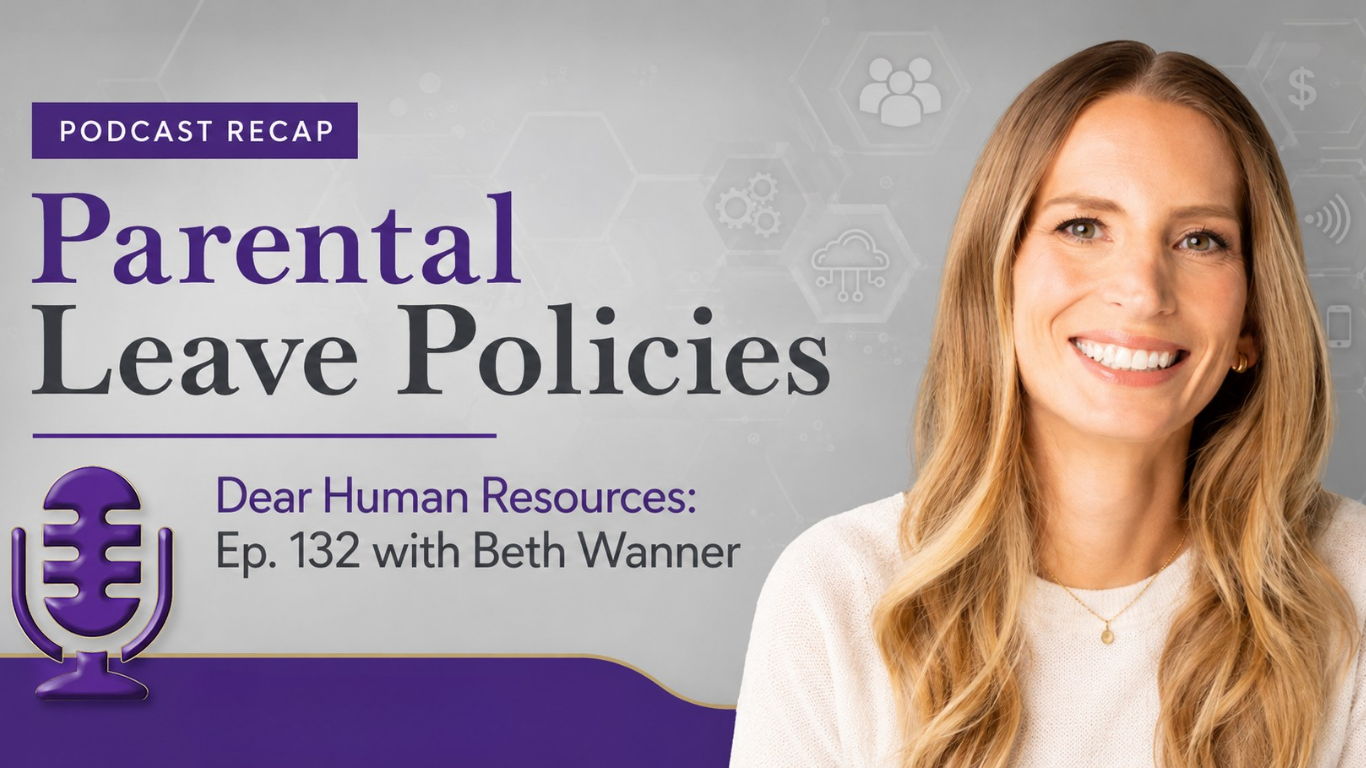
Beth Wanner, Founder of Mother Cover, recently joined Marie-Line Germain, a professor of Human Resources and Leadership at Western Carolina University, on the Dear Human Resources podcast to talk about the gap between parental leave policies and the lived experience of employees, managers, and teams.
The conversation focused on where good intentions fall apart, how bias can quietly show up, and what companies can do to make leave work better for everyone involved.
What makes parental leave policies fall short?
Parental leave policies often fall short when companies do not have a clear plan for role coverage, team workload, communication during leave, and re-onboarding after the employee returns.
A strong policy tells employees they can take leave.
A strong coverage plan makes that leave work in practice.
Because leave is not just about the person stepping away. It affects their manager, their team, their clients, their projects, and the momentum of the business.
When there is no plan, everyone feels it.
And somehow, the person preparing to give birth, adopt, recover, or care for someone they love often becomes responsible for solving all of it.
That is a problem.
A policy alone does not protect the employee
Many companies proudly offer parental leave. That matters. Policies are important.
But policies alone do not answer the questions that create stress for everyone involved.
Who will cover the role?
What work needs to continue?
What can wait?
How will the team avoid taking on too much?
How will the employee stay visible while they are away?
How will they return without feeling like they are months behind?
These are the places where the real experience of leave is shaped.
When there is no clear parental leave coverage plan, the person going on leave often feels responsible for holding everything together before they go. That can mean over-documenting, overworking, and carrying the emotional weight of knowing their absence may create stress for the people they care about.
They may be preparing for birth. They may be navigating adoption. They may be stepping into caregiving. They may be dealing with a medical reality that is deeply personal and very hard.
They should not also have to become the unpaid architect of business continuity.
Bias often shows up in the decisions around leave
One of the most important themes from Beth’s conversation on Dear Human Resources was how bias can appear in subtle ways.
It may not sound like discrimination. It may even sound thoughtful.
“She probably won’t want that promotion right now.”
“Let’s not give him travel right away.”
“They’ll want something less demanding when they come back.”
“We should protect them from too much responsibility.”
The problem is those decisions are often made without the employee in the room.
Leaders may believe they are being supportive, but they can end up limiting someone’s visibility, opportunities, and career growth.
A parent returns from leave and suddenly the stretch assignments are gone. The promotion conversation has cooled. Their role has shifted. Their ambition has been quietly edited by someone else.
That is how parental leave becomes a career penalty, even inside companies with strong policies.
The frustrating part? Much of this can happen inside companies filled with good people trying to do the right thing.
Good intentions are lovely. They are also wildly insufficient without a plan.
Better parental leave support starts before leave begins
A stronger leave experience begins well before the employee’s last day.
Companies need to stop expecting the person taking leave to become the project manager of their own absence. Their input matters, of course. Their knowledge is essential. But they should not be left to carry the entire transition alone.
A thoughtful parental leave coverage plan should make clear:
Who is responsible for coverage
Which priorities need to keep moving
How decisions will be made while the employee is away
How the team will be protected from burnout
How the employee’s work and reputation will be represented in their absence
What communication, if any, the employee wants during leave
That last point is really important. Communication during leave should be led by the person on leave. Some people want light updates. Some want none. Both are valid.
A “quick question” can still be work.
A “tiny favour” can still pull someone back into the mental load they are supposed to be protected from.
Leave should not come with invisible strings attached.
The team needs support too
Parental leave support is often talked about as if it only affects one person.
It does not.
When someone steps away and there is no coverage plan, their work usually lands somewhere. Most often, it lands on the desks of people who already have full-time jobs.
At first, everyone wants to be supportive. Of course they do. They like their colleague. They are happy for them. They believe in being a good teammate.
Then the weeks pass.
The extra meetings pile up. Decisions slow down. Deadlines start to slip. The team gets tired. The manager gets stretched. The person on leave starts to feel guilty. Resentment creeps in quietly.
Nobody wants to say it, because who wants to be the person complaining about someone taking parental leave?
So the frustration gets buried.
And buried frustration has a nasty habit of turning into bias.
That is why leave coverage matters. It protects the employee going on leave, yes. It also protects the team left behind.
Returning to work deserves more than a welcome back email
The return from leave is one of the most overlooked parts of the employee experience.
Too often, companies treat it like a date on a calendar.
Someone comes back Monday. A welcome message gets sent. Maybe there are muffins. Then everyone expects them to jump back in at full speed.
Bold choice. Usually a bad one.
A returning parent or caregiver is coming back after a major life change. They may be adjusting to a new identity, new routines, new responsibilities, and very little sleep. At the same time, the business has moved on without them. Projects changed. Decisions were made. Context was lost.
A better return includes a real re-onboarding plan.
That might look like a 30, 60, 90-day ramp. It should include updates on what changed, clarity on priorities, time to reconnect with key people, and a plan for easing back into the work without sidelining their career.
Support does not mean lowering expectations.
It means giving people what they need to do great work again.
How Mother Cover helps with parental leave coverage
Mother Cover provides interim and fractional coverage for parental and caregiver leaves so companies can keep work moving while employees take the time they need.
Mother Cover’s Leave Partners step into roles to support the employee, the team, and the business. They help with transition planning, cover key responsibilities, support team execution, document important context, and help prepare for a smoother return.
The goal is never to replace the person on leave.
The goal is to protect their work, keep their name active in the right rooms, and make sure they return to clarity instead of chaos.
When leave coverage is done well, everyone benefits.
The employee can step away with less fear.
The team is not buried under extra work.
The manager has support.
The business keeps moving.
And the company shows that its values are more than a line in the employee handbook.
Parental leave is a business decision
Too often, parental leave is talked about like a nice benefit.
It is much bigger than that.
How a company handles leave affects retention, performance, team morale, trust, and culture. Poor planning can lead to burnout, resentment, missed work, stalled careers, and preventable turnover.
Strong planning helps companies keep great people.
That matters because parents and caregivers are not a small exception in the workforce. They are the workforce.
People have babies. People care for aging parents. People face health needs, family needs, and life moments that require time away.
Smart companies plan for that reality.
The shift HR leaders need to make
Parental leave should not feel like a surprise every time it happens.
The companies getting this right are the ones treating leave as a normal part of working life. They are building practical plans around it. They are protecting the employee’s career, the team’s capacity, and the company’s momentum at the same time.
That is the future of leave.
Less scrambling.
Less guilt.
Less quiet career damage.
More clarity, more coverage, and more proof that supporting working parents is good business.
Mother Cover was built for exactly that.
FAQ: Parental leave coverage plans
What is a parental leave coverage plan?
A parental leave coverage plan outlines how an employee’s responsibilities, priorities, communication, and return-to-work process will be handled while they are on leave.
It gives the employee, manager, team, and business clarity before the leave begins.
Why do parental leave policies fail in practice?
Parental leave policies often fail in practice because companies do not plan for workload coverage, team capacity, decision-making, communication during leave, or re-onboarding after the employee returns.
Without those pieces, the policy may exist on paper, but the experience can still feel stressful, unclear, and unfair.
How can companies support employees returning from parental leave?
Companies can support returning employees with a thoughtful re-onboarding plan, clear priorities, updated context, manager support, and a realistic ramp back into the role.
A strong return plan helps employees reconnect with the business without feeling like they have to catch up on months of work overnight.
How does Mother Cover help with parental leave coverage?
Mother Cover provides interim and fractional Leave Partners who help cover roles during parental and caregiver leave.
Leave Partners support transitions, keep important work moving, help teams avoid burnout, document context, and support a smoother return for the employee coming back from leave.
Why does parental leave coverage matter for companies?
Parental leave coverage matters because it protects business continuity, employee retention, team morale, and workplace culture.
When companies plan well, employees can take leave with less fear, teams can keep moving without carrying unsustainable workloads, and businesses can retain the people they have worked hard to hire.
At Mother Cover, we help companies build leave programs that actually work—from sourcing interim and fractional backfill talent to guiding leaders through transitions with confidence. Because parental leave doesn’t need to be a career or team setback.
🌱 Temporary leave. Not permanent setbacks.
→ Need support for an upcoming leave? Let’s talk.
